
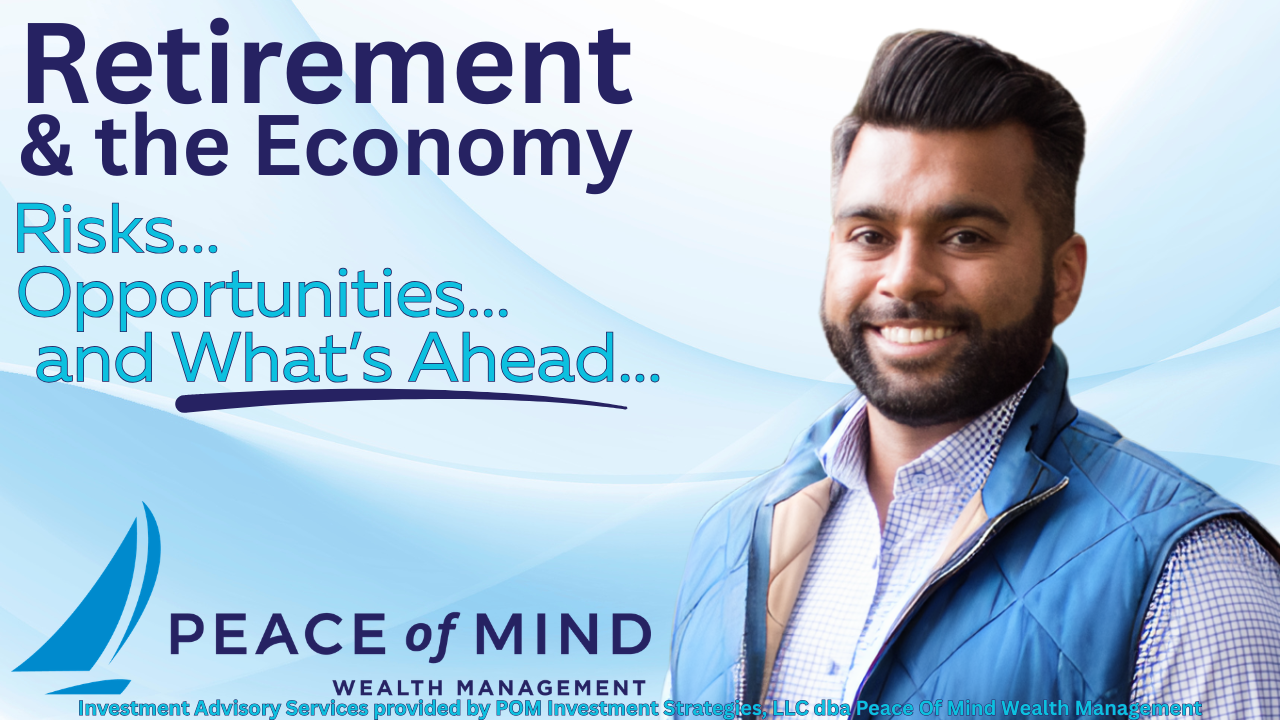
Feeling Uncertain About the Economy? Here’s a Clearer Way to Look at It
For the second quarter of 2026, we sat down with Tom Siomades to look past the headlines and focus on what’s actually driving the economy. The news cycle can feel intense, but the underlying story is often more balanced than it appears.
Let’s walk through what’s happening, what it means, and ways to your retirement investment strategy moving forward.
Why markets haven’t reacted the way many expected
With ongoing global tensions and uncertainty, many investors expected a sharper market decline this year. Instead, markets have held up better than expected.
One reason is that markets tend to look ahead. Right now, investors seem to believe current conflicts may remain contained rather than expand. When that expectation holds, markets often stay more stable.
Even so, stability can shift quickly. If energy prices stay elevated or conflicts continue longer than expected, market behavior may change.
A well-structured retirement plan is built with this in mind, prepared to support you through periods of volatility without needing major adjustments.
Energy, oil, and why it matters to your plan
Energy has been one of the biggest drivers of recent economic conversations.
The Strait of Hormuz, which handles roughly 20% of the world’s oil supply, has been a point of concern. Even the possibility of disruption can lead to higher prices and delays in shipping.
We’ve seen this before. When energy costs rise, the effects move through the broader economy. Everyday goods become more expensive, and businesses adjust as costs increase.
In retirement, this often shows up in a simple way: your money may not stretch as far as it once did. Over time, that can influence how comfortably you’re able to live.
If conditions stabilize and supply improves, energy prices may ease. That can help relieve some of the pressure on day-to-day costs.
Government shutdowns and the role of confidence
Another factor this year has been the ongoing government shutdown situation.
While the direct economic impact may be limited in the short term, it can influence how people feel. Travel disruption, delays, and uncertainty often lead consumers and businesses to take a more cautious approach.
That shift in behavior matters because it can slow economic activity.
When building a financial plan from retirement perspective, this highlights an important point: not all risks are financial in nature. Sometimes it appears in how people respond. When confidence dips, spending and investment decisions tend to follow.
A thoughtful plan takes both market conditions and human behavior into account.
Inflation, interest rates, and the current pause
Inflation and interest rates continue to be key areas of focus.
At the start of the year, expectations leaned toward rate cuts. Instead, we’ve seen more of a holding pattern. Inflation has shown signs of picking back up, influenced in part by energy prices and policy uncertainty.
This creates a balancing act for policymakers.
If inflation remains elevated, the Federal Reserve may keep rates higher for longer. In that environment, borrowing costs stay elevated and economic growth may slow.
This affects multiple parts of a financial plan. Rising costs influence spending, while interest rates shape income strategies and investment decisions.
That’s why diversification remains important, helping reduce reliance on any single outcome.
A steady foundation beneath the noise
Despite the concerns, there are encouraging signs.
Corporate earnings remain solid, and we’re not seeing the kind of widespread stress that typically signals a major downturn. The broader economy continues to show resilience.
There are also longer-term growth drivers worth watching, particularly in areas like technology and artificial intelligence. While short-term enthusiasm can shift, the long-term impact could be meaningful.
Staying focused on the bigger picture allows investors to benefit from these trends over time.
The biggest risk: reacting at the wrong time
During uncertain periods, one theme comes up often in conversations with clients: how decisions are made matters just as much as market conditions.
It’s completely natural to feel uneasy when headlines are negative. The instinct is to act, but steady decision-making tends to serve investors better during these moments.
A well-built plan already accounts for market movement. It’s designed to absorb changes without requiring constant adjustments.
Before making any decisions, we encourage folks to pause and ask a simple question: Has my long-term plan actually changed?
In many cases, it hasn’t.
A simple way to stay grounded right now
When the environment feels uncertain, it helps to review a few core areas:
- Confirm your income sources still align with your needs
- Review your portfolio to ensure it remains well balanced
- Maintain accessible funds for near-term expenses
- Revisit how rising costs may affect your long-term plans
- Check that your strategy still reflects your goals
These are steady check-ins that help keep your plan aligned over time.
Staying disciplined when it matters most
Periods of uncertainty can bring both challenges and potential advantages.
Markets move in cycles, and volatility is a normal part of long-term investing. What tends to matter most is consistency and a willingness to stay aligned with a thoughtful approach.
Investors who remain focused on their plan are often better positioned than those who make frequent changes in response to headlines.
Final thoughts
There’s no shortage of uncertainty right now. With ongoing global events and questions around inflation and interest rates, it’s understandable to feel cautious.
Uncertainty is a normal part of investing and planning for the future.
With a clear strategy and a focus on what you can control, you can continue moving forward with confidence.

If you’d like to talk through how your plan is positioned in today’s environment, we’re here to help. Schedule a complimentary 15-minute call with our team at Peace of Mind Wealth Management. If we can’t answer everything in that time, we’ll help guide you to the next step.